
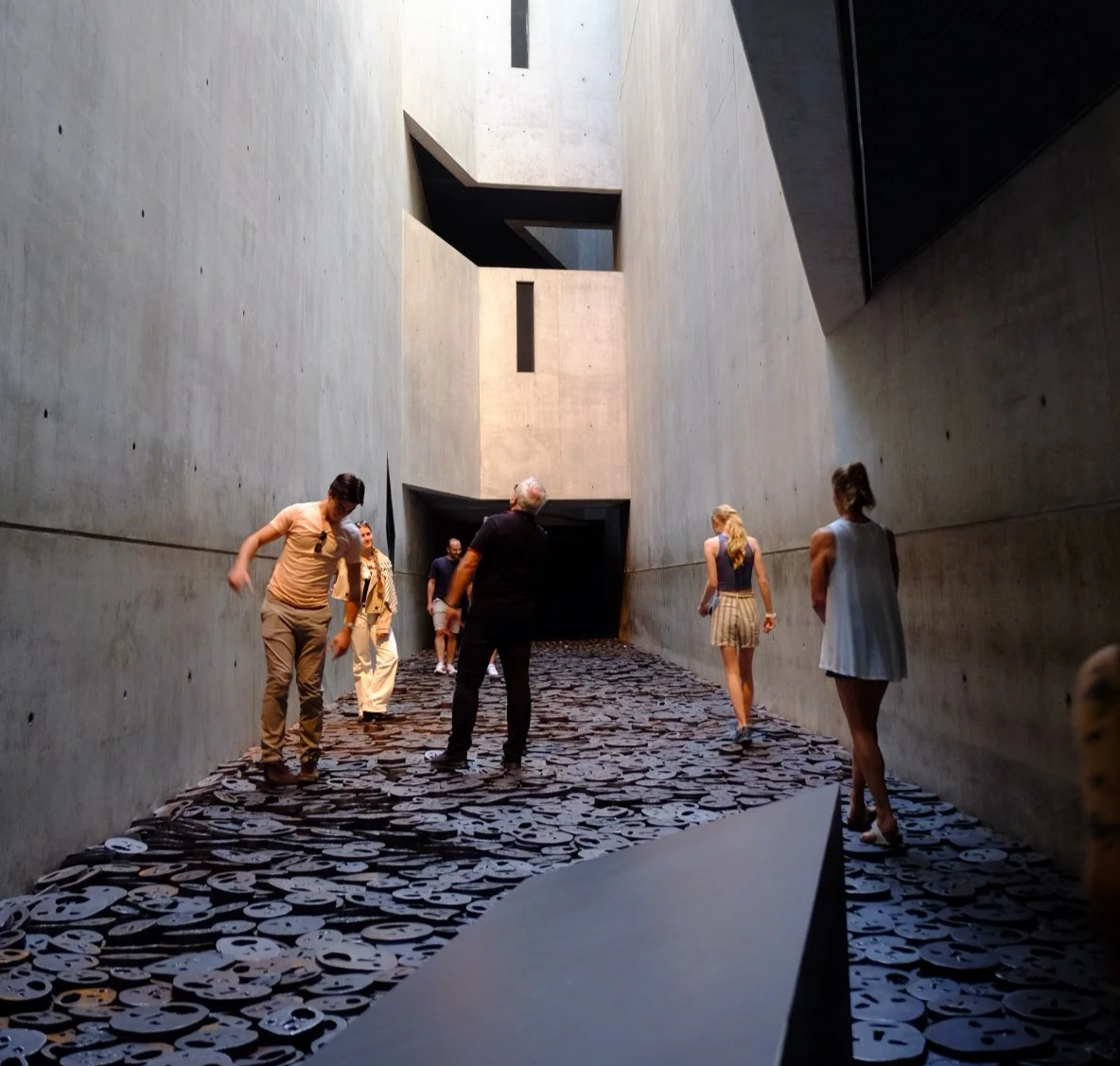
What does the Holocaust feel like under your own feet? At the Jewish Museum Berlin, you don't read the history – you walk it: off-balance, in the dark, across ten thousand crying iron faces.
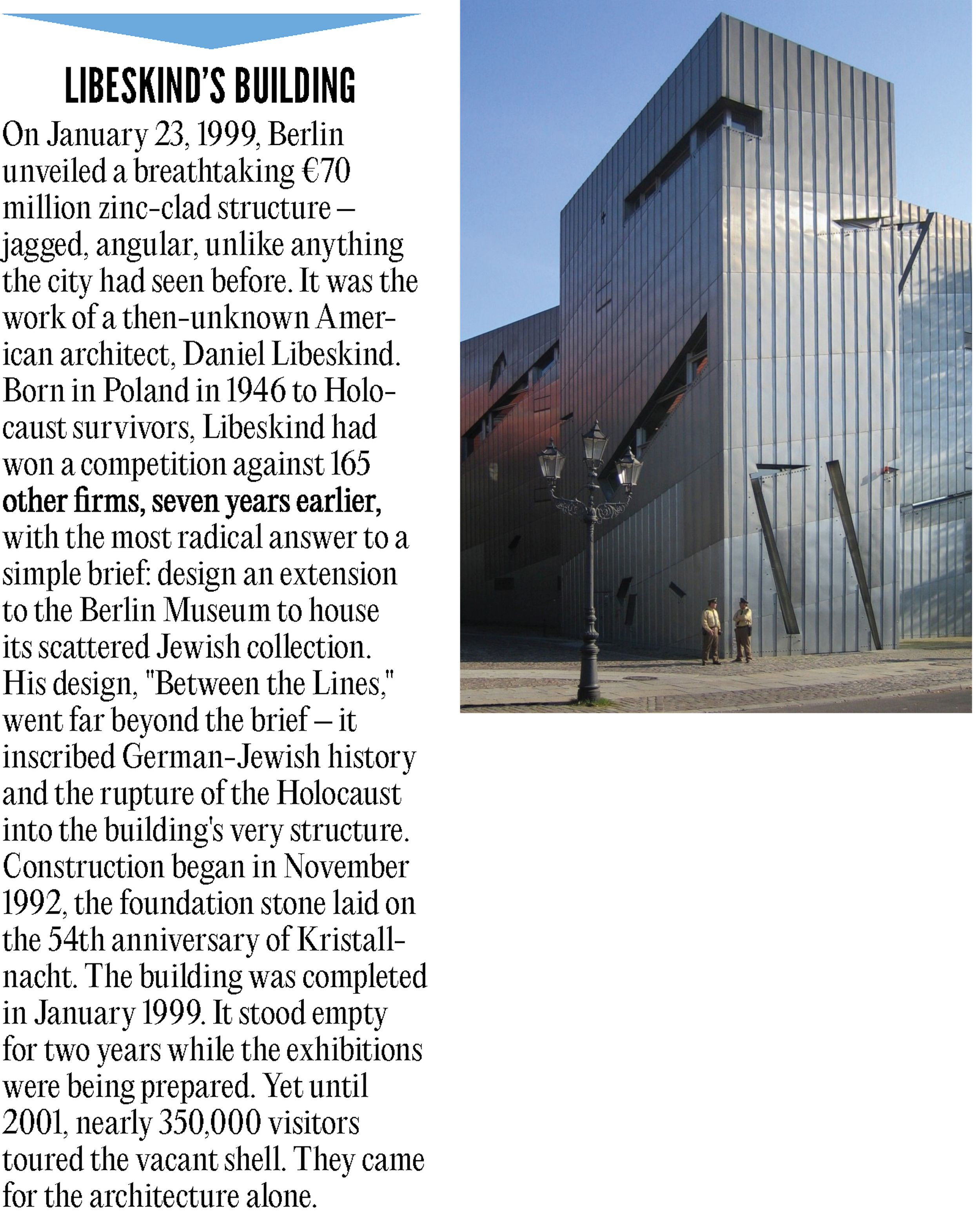
This year marks 25 years since the Jewish Museum Berlin opened its collections to the public. But since 1999 the building itself has been the main draw. To this day, Daniel Libeskind's breathtaking architecture remains a must-visit. Inside the Museum, on the upper floors, the permanent exhibition, "Jewish Life in Germany: Past and Present", aims to piece German-Jewish history back together across the Holocaust's interruption. But the building does the opposite. It insists on the rupture. Here you zigzag through a broken Star of David and land somewhere history refuses to explain. Enter through the Old Building on Lindenstraße 9–14. Descend underground, where three intersecting axes await: Exile, Holocaust and Continuity. Each leads to a different experience of Jewish life. Head for Exile, and corridors narrow, ceilings drop, walls close in – until walking feels less like touring, more like fleeing. Outside, the Garden of Exile: 49 leaning concrete pillars, olive trees rooted out of reach, the ground tilted to throw you off balance. Another axis leads to the Holocaust Tower: a 24-metre-high concrete silo, sealed off from the building, reachable only through underground. Unheated and
unlit but for one blade of daylight through a slit high overhead. It's a cold, dead-silent space, hollow and isolating. You stop reading about confinement – you feel it. And then there is the Memory Void. You enter a tall, bare concrete room on the ground floor. The floor is covered with over 10,000 heavy iron faces, mouths open in a silent scream, scattered across the ground. This is Menashe Kadishman's Shalekhet (Fallen Leaves). Don't hesitate – the artist means for you to walk on them. Every step clangs through the bare room, a metallic cry that echoes off the walls. A tribute to victims of violence everywhere.
No heating. No captions. Just absence, made walkable. 25 years on, and still more relevant than ever.
| Beatrice Mezzetti
JÜDISCHES MUSEUM Lindenstraße 9-14, Kreuzberg. Tue-Sun 10:00-18:00, free entry
